

- This event has passed.
Dinosaur Game
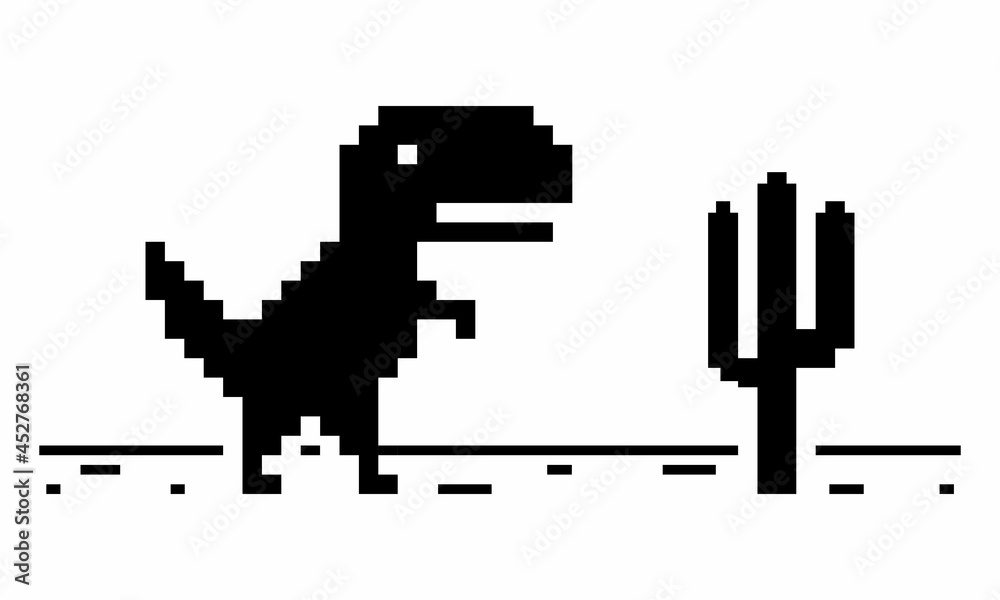
The story of Dinosaur Game begins in 2014, when Google Chrome’s UX designer Sebastien Gabriel and his team were brainstorming a fun way to make the browser’s “No Internet” page more entertaining. Losing connection is frustrating, but what if Chrome turned that moment into a mini adventure?
The result was a small game where a running dinosaur, specifically a Tyrannosaurus rex, dashes endlessly through a desert landscape filled with cacti and birds. The player presses a single key — the spacebar — to make the dinosaur jump. Simple, minimal, and effective.
Gabriel once explained that the dinosaur symbolized the “prehistoric age before Wi-Fi,” making the idea both funny and fitting. At first, the project was nicknamed “Project Bolan”, a reference to Marc Bolan, the lead singer of the 1970s band T. Rex. The name stuck for a while during development, and fans still remember it as a fun trivia fact about the game’s origin.
How to Play
Playing Dinosaur Game is as straightforward as games get. When your internet connection drops, Chrome shows the classic “No Internet” message along with a little gray dinosaur. Just press the spacebar (or tap the screen on mobile), and the dinosaur starts running.
From that moment, the game becomes an endless runner. The desert scrolls endlessly to the right, bringing in random obstacles — mainly cacti and later flying pterodactyls. The goal is to survive as long as possible without crashing into anything. The longer you run, the faster the dinosaur moves, and the harder it becomes to react.
The mechanics are delightfully simple:
Spacebar / Tap: Jump
Arrow Down / Swipe Down: Duck (to avoid birds)
Avoid obstacles: Hitting anything ends your run instantly
Score: Increases the longer you survive
At 700 points, the background shifts from day to night, adding a visual twist and extra challenge. The longer you last, the faster and darker the environment becomes. There’s no end — only your personal best score.
Why It’s So Addictive
What makes Dinosaur Game so addictive isn’t its complexity — it’s the opposite. Its minimalist design removes distractions and focuses purely on reflex and rhythm. Every run feels slightly different due to random obstacle generation, yet simple enough to jump right back in after a crash.
This instant restart mechanic — die, press space, run again — creates a natural feedback loop that keeps players hooked. It’s the same principle behind arcade classics like Flappy Bird or Tetris: easy to learn, hard to master, impossible to quit.
Additionally, because the game often appears during moments of boredom or frustration (like losing connection during work), it feels like a small, unexpected gift. Instead of being angry at the internet, you get to jump over cacti and chase a new high score.
Design and Aesthetic
The art style of Dinosaur Game is pure 8-bit nostalgia. Everything is rendered in monochrome pixels — the dinosaur, the desert, the cacti, even the clouds. This minimalist aesthetic isn’t just about style; it’s about speed and universality. The game runs instantly on any device, no downloads, no lag, no fancy graphics — just fun.
Despite its simplicity, small details make the world feel alive. The dinosaur blinks when idle, the ground scrolls smoothly, and the transitions between day and night give the game a sense of time and progression. These subtle touches elevate what could’ve been a throwaway Easter egg into something charming and memorable.
